ADHD or airway problem? What mouth breathing does to focus and sleep
Sep 27, 2026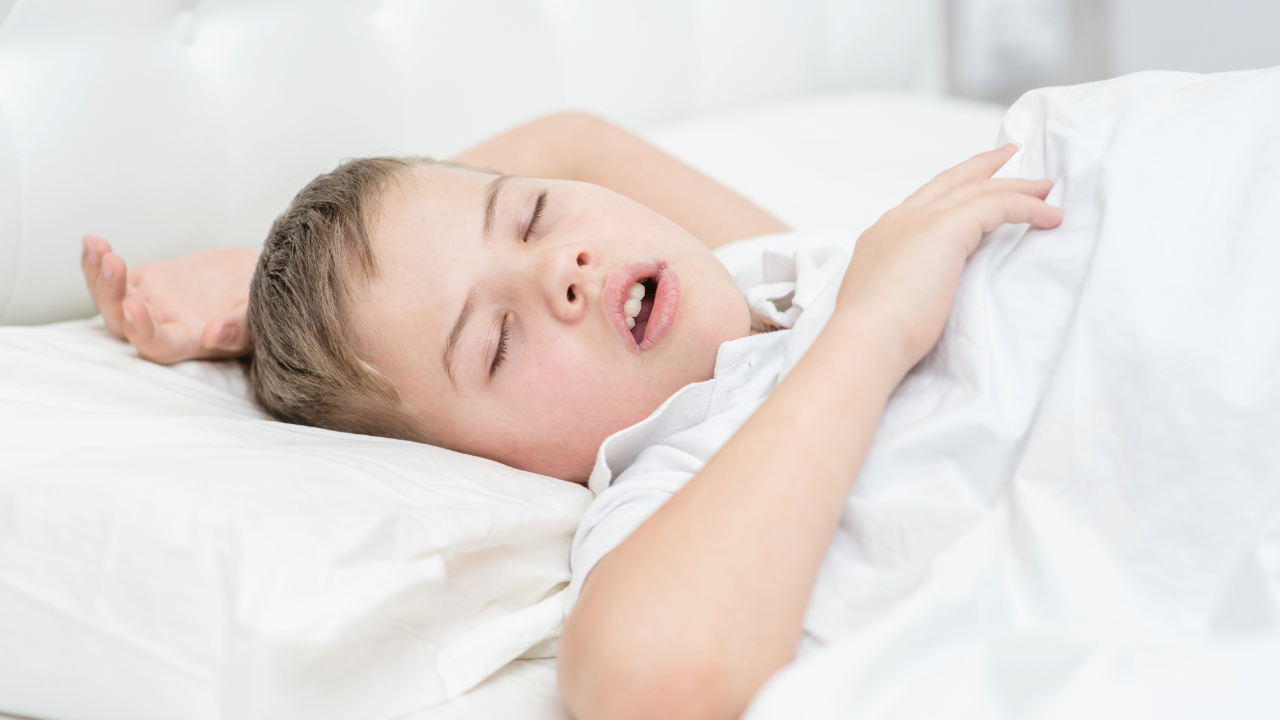
High palates, chronic mouth breathing, and the hidden airway link to attention problems
You've probably heard the standard story: ADHD is a brain-based condition involving dopamine and norepinephrine signalling. Medication and behavioural strategies help many people. That's true for a large number of individuals.
But there's another story that doesn't get enough attention, one involving the airway, the shape of the roof of the mouth, and how a child, or an adult, actually breathes, especially at night.
In a meaningful subset of people diagnosed with ADHD, the root driver, or a major amplifier, is not purely neurodevelopmental. It's sleep-disordered breathing driven by chronic mouth breathing and a high, narrow palate.
How I started noticing this
I started seeing it in kids first. Tired eyes. Bags under them, on children who should have been well rested. No child should have bags under their eyes. They are children. Their teeth so crowded there was barely room for them in the jaw. It was consistent enough that I couldn't write it off.
Then I started wondering about something else entirely: why does an adult's neck posture change so much when they're a chronic mouth breather? Chin forward, chronically tight upper neck muscles..
Here's the mechanical piece nobody explains. If you breathe through your mouth regularly, you have to tilt your head back to actually get air down. It's the same reason you tilt someone's head back to give CPR, that tilt opens the airway. A chronic mouth breather is doing a milder version of that same head-back tilt all day, every day, just to breathe. Over years, that posture reshapes the neck.
That question sent me down a genuine rabbit hole. I started working with a functional and preventive dentist, and referring kids with high palates and crowded teeth to get properly assessed for palate expanders and oromyofunctional therapy.
The results were honestly a bit wild. Kids who snored, kids with ADHD-like symptoms, started to change once they could actually breathe properly. Not overnight, and not for every single one, but enough that it stopped looking like coincidence. The kids entire face changed widening through the maxilla and space for their teeth to come down.
How mouth breathing creates a high palate, and why that matters
When a child, or an adult, primarily breathes through the mouth instead of the nose, the tongue drops to the floor of the mouth instead of resting against the roof. The tongue's natural upward pressure is one of the main forces that widens and shapes the palate during growth.
Without that pressure:
- The upper jaw develops more narrowly
- The palate becomes high-arched or vaulted, sometimes called a "Gothic" or V-shaped palate
- Nasal airway volume decreases, because the palate forms the floor of the nose
- The tongue has less space and is more likely to fall backward during sleep
This creates a self-reinforcing cycle: narrow palate leads to harder nasal breathing, which leads to more mouth breathing, which leads to further restriction of facial growth and airway space.
The sleep connection that mimics ADHD
Chronic mouth breathing and a restricted airway commonly produce sleep-disordered breathing, ranging from habitual snoring and upper airway resistance to mild obstructive sleep apnoea. Sleep becomes fragmented. Oxygen levels dip intermittently. Deep restorative sleep is reduced.
The daytime result in children often looks exactly like ADHD:
- Difficulty sustaining attention
- Hyperactivity or restlessness, the body compensating for fatigue
- Impulsivity
- Emotional reactivity and irritability
- Poor working memory and academic performance
Adults may experience more brain fog, fatigue, irritability, and executive dysfunction rather than classic hyperactivity.
Research consistently shows elevated rates of ADHD-like symptoms in children with mouth breathing or sleep-disordered breathing. Some studies report that children with breathing problems are many times more likely to show behavioural issues resembling ADHD. Conversely, children already diagnosed with ADHD are more likely to have narrower dental arches, higher rates of snoring, restless sleep, and high or narrow palates.
Treating the airway, whether through adenotonsillectomy when indicated, orthodontic expansion of a narrow palate, allergy management, or myofunctional therapy to restore nasal breathing and proper tongue posture, has led to measurable improvements in attention, behaviour, and sleep in multiple clinical reports and studies. In some cases, symptoms improve enough that the ADHD diagnosis is no longer fully met or medication needs decrease.
What it looks like in children vs adults
The same underlying airway and breathing issues, chronic mouth breathing, high or narrow palate, sleep-disordered breathing, can produce ADHD-like symptoms in both age groups. But the outward presentation often differs, because children's nervous systems and behaviour express fatigue and sleep fragmentation differently than adults' do.
In children
Children rarely look "tired" the way adults do. Instead, sleep fragmentation and reduced oxygen delivery during the night often show up as over-arousal during the day: hyperactivity, fidgeting, difficulty staying on task, impulsivity, emotional outbursts, dark circles under the eyes, open-mouth posture, and forward head posture. At night, watch for mouth breathing, snoring, restless sleep, teeth grinding, night sweats, and bedwetting past the expected age.
Many of these children receive an ADHD diagnosis, or are treated primarily with stimulants, without a thorough airway or sleep evaluation. In some cases, addressing the breathing problem leads to noticeable improvement in focus, behaviour, and sleep, sometimes enough that the ADHD diagnosis is reconsidered or medication needs decrease.
In adults
Adults with long-standing mouth breathing and restricted airways more often present with the inattentive and cognitive side of ADHD-like symptoms rather than overt hyperactivity: brain fog, mental fatigue, difficulty sustaining attention, poor working memory, internal restlessness, reliance on caffeine to function, and the sense of working twice as hard as everyone else. At night, look for mouth breathing, quiet but fragmented sleep, teeth grinding, morning headaches, and waking feeling tired despite a full night in bed.
Many adults with these patterns were never evaluated for airway issues as children. They may have carried a childhood ADHD diagnosis forward, or received an adult diagnosis later in life when demands increased. The breathing and structural contributors are frequently overlooked because the classic hyperactive-kid picture is gone.
Red flags worth noticing
Nighttime
- Mouth breathing or open-mouth posture during sleep
- Snoring, even light or occasional
- Restless sleep, frequent position changes, or odd sleeping positions
- Teeth grinding and night sweats
- Bedwetting beyond the expected age
Daytime and structural
- Chronic open-mouth posture or dry lips, dark circles under the eyes
- Nasal congestion, morning headaches, or difficulty waking
- Forward head posture
- High-arched or narrow palate, crowded teeth, crossbite, or a recessed chin
These signs do not prove the breathing issue is the sole cause, but they strongly suggest it should be investigated.
It's rarely either/or
True ADHD exists. Genetics, neurotransmitter differences, and other factors are real. Many people have both primary ADHD and an airway contribution. Treating the breathing problem does not magically erase ADHD in everyone, but it frequently reduces the severity of symptoms, improves sleep quality, and makes other interventions more effective.
The pattern people notice is this: poorer nasal breathing and more restricted airway architecture correlate with higher rates of ADHD-like symptoms. Improving the airway and restoring nasal breathing often moves the symptoms in the opposite direction.
Where nutrient status fits into this picture
Fragmented sleep and low oxygen overnight don't just affect the brain in isolation. They sit alongside, and often compound, the same nutrient gaps that independently drive attention, mood, and energy problems.
Iron status matters for dopamine production, the same pathway involved in attention and focus. Magnesium supports a nervous system that's already working overtime to compensate for poor sleep. Vitamin D and B12 both influence energy and cognitive function, and both are commonly missed on a standard blood panel that only flags the extremes. A body already under strain from disrupted sleep has less reserve to cover for a quiet deficiency sitting underneath it.
This is exactly why airway and breathing issues shouldn't be assessed in isolation either. If a child or adult has the red flags above and a nutrient gap on top of it, the two problems can look identical from the outside, and treating only one rarely resolves the full picture.
What to do next
- Screen carefully for sleep and breathing issues, not just "do you snore?"
- Consider evaluation by an interdisciplinary team, including a GP, ENT, airway-aware dentist/orthodontist, osteo/physio/chiro who have a special interest in breathing and airways, and potentially a sleep specialist.
- Address obvious contributors: food allergies, allergies ,enlarged tonsils or adenoids, nasal obstruction.
- Explore structural options when appropriate, such as palate expansion in growing children or oromyofunctional therapy
- Continue evidence-based ADHD support while the airway is being optimised, this is additive, not mutually exclusive
Functional and integrative approaches already emphasise looking beyond the brain for root contributors: nutrients, gut, inflammation, sleep. Breathing and airway structure belong on that same list.
Sometimes the most powerful intervention for attention isn't another dose of stimulant. It's finally getting the brain oxygen, restorative sleep, and the right raw materials to the brain that desperatly needs them.
Close the nutrient gap hiding underneath
The Functional Blood Analysis reads the pattern across iron, B12, vitamin D, magnesium and more, so a quiet deficiency doesn't get mistaken for the whole story.
See the Functional Blood AnalysisThis article is educational, not medical advice. Diagnosis and treatment of ADHD, sleep-disordered breathing, or orthodontic issues require qualified clinicians. Individual results vary.
SUBSCRIBE TO MY BLOGS
Root-cause health explained simply.
I hate SPAM. If you've over it unsubscribe whenever. We will never sell your information, for any reason.